When choosing stainless steel for a project, 201 and 304 stainless steel are two grades buyers frequently compare. Both are austenitic stainless steels, but their different alloy compositions give them different levels of corrosion resistance, formability, strength, and cost.
For procurement managers, contractors, new steel buyers, and salespeople, the decision should not simply be “Which grade is better?” The more useful question is:
Which grade provides the right performance for the application without unnecessary material cost?
In general, 201 is often considered for cost-sensitive applications with relatively mild service conditions, while 304 is preferred when corrosion resistance, forming performance, and long-term reliability are more important.
What Is 201 Stainless Steel?
201 stainless steel is a chromium-nickel-manganese austenitic stainless steel. Its higher manganese and lower nickel content compared with 304 help reduce dependence on nickel, making it an attractive option for applications where controlling material cost is important.
Key Characteristics of 201 Stainless Steel
201 generally offers:
- Good general corrosion resistance
- Good strength
- Good formability
- Suitable weldability for many applications
- Lower material cost than 304 in many market conditions
However, because 201 uses a higher manganese content and lower nickel content than 304, it generally provides lower corrosion resistance, particularly in environments with high humidity, chlorides, or other corrosive media.
Where 201 Stainless Steel Works Well
Typical applications include:
- Indoor architectural products
- Furniture components
- Decorative products
- Appliance components
- General fabrication
- Some kitchen equipment
The key consideration is the service environment. A 201 product used indoors under relatively mild conditions can perform well, but the same material may be a poor choice in a humid, salty, or chemically aggressive environment.
What Is 304 Stainless Steel?
304 stainless steel is one of the most widely used austenitic stainless steel grades. Its combination of corrosion resistance, formability, weldability, and availability makes it suitable for a much wider range of applications.
Key Characteristics of 304 Stainless Steel
304 provides:
- Good corrosion resistance
- Excellent formability
- Good weldability
- Good resistance to many food and industrial environments
- Broad application flexibility
Its relatively high chromium and nickel content helps provide a stable passive layer and good corrosion resistance, while maintaining the ductility and forming performance required for a wide range of fabrication processes.
Where 304 Stainless Steel Works Well
Common applications include:
- Food processing equipment
- Commercial kitchen equipment
- Cookware
- Industrial equipment
- Outdoor products
- Architectural components
- General metal fabrication
For buyers who are uncertain about environmental conditions or require a material with broader application capability, 304 is often the safer starting point.
201 vs 304 Stainless Steel Summary Table
| Factor | 201 Stainless Steel | 304 Stainless Steel |
|---|---|---|
| Alloy characteristics | Higher manganese, lower nickel | Higher nickel, lower manganese |
| Corrosion resistance | Moderate | Higher |
| Formability | Good | Excellent |
| Weldability | Good for suitable applications | Generally excellent |
| Material cost | Usually lower | Usually higher |
| Magnetic behavior | Generally non-magnetic when annealed; may become magnetic after cold working | Generally non-magnetic when annealed; may become magnetic after cold working |
| Typical applications | Indoor/general applications | Food, industrial, outdoor, and general applications |
| Main advantage | Cost efficiency | Performance and versatility |
The important point is that 201 is not simply a cheaper version of 304. Its chemical composition and performance characteristics are different, so the appropriate grade depends on the actual application.
201 vs 304 Stainless Steel: Key Differences
Chemical Composition
The primary difference between 201 and 304 is their alloy composition.
201 uses a higher proportion of manganese and a lower proportion of nickel than 304. 304 relies more heavily on nickel as part of its alloy system.
This difference affects the material’s:
- Corrosion resistance
- Mechanical characteristics
- Forming behavior
- Cost structure
Buyers should avoid judging a stainless steel grade simply by its appearance. Two materials may have similar surface finishes while performing very differently in service.
When purchasing, the grade should be clearly specified together with the applicable material standard and product requirements.
Corrosion Resistance
Corrosion resistance is one of the biggest reasons buyers choose 304 instead of 201.
304 generally performs better in environments involving:
- Moisture
- Humidity
- Outdoor exposure
- Food-processing conditions
- Cleaning chemicals
- Moderate corrosive exposure
201 can be suitable for relatively mild indoor environments where corrosion exposure is limited.
For example, 201 may be reasonable for an indoor decorative component, while 304 would generally be more appropriate for equipment exposed regularly to water or outdoor weather.
For procurement managers, the practical rule is simple:
If corrosion resistance directly affects product life, maintenance, or customer complaints, 304 is generally the safer choice.
Strength and Formability
Strength and formability should also be considered when selecting between 201 and 304.
Both grades can be used for forming, but the actual performance depends on the specific material condition, thickness, processing method, and product geometry.
This is particularly important for:
- Deep drawing
- Stamping
- Bending
- Forming complex shapes
For demanding forming applications, buyers should not select a grade based only on a generic strength value. They should discuss the required forming process with the supplier and confirm whether the specific material condition is suitable.
For example, a cookware manufacturer may require good deep-drawing performance rather than simply choosing the grade with the lowest material price.
Weldability
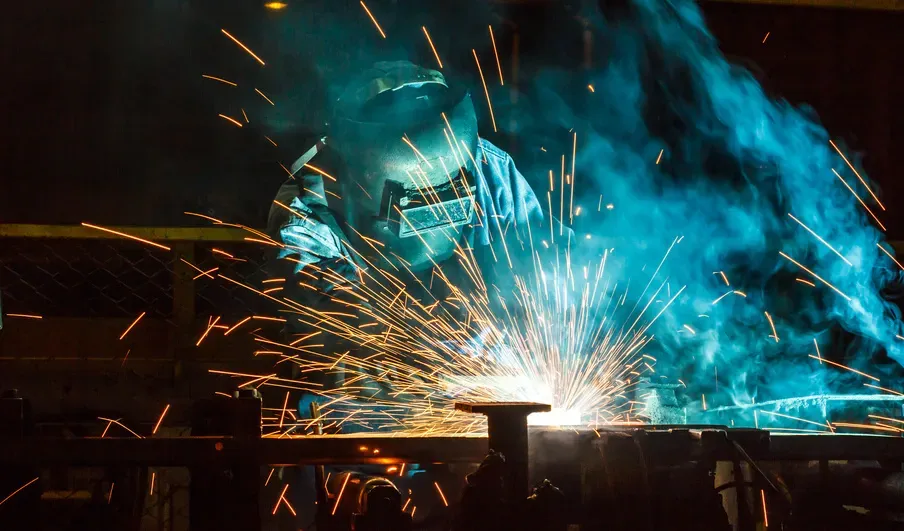
Both 201 and 304 can be welded when appropriate welding procedures are used.
However, the final welding performance depends on more than the stainless steel grade. Buyers should also consider:
- Material thickness
- Welding method
- Joint design
- Heat input
- Service environment
- Post-welding treatment
For applications where welded areas will face corrosive conditions, the corrosion performance of the finished welded assembly should be considered rather than evaluating the base material alone.
If welding is a major part of the production process, buyers should communicate this requirement when requesting stainless steel from a supplier.
Price and Total Cost
201 is generally less expensive than 304, although actual prices vary with nickel and other raw material markets, specifications, thickness, surface finish, and supply conditions.
The mistake is to compare only the purchase price.
Consider two projects.
Project A: An indoor decorative component with limited moisture exposure.
Using 201 may provide adequate performance while reducing material cost.
Project B: Outdoor equipment exposed to rain and humidity.
The lower initial price of 201 may not justify the potential increase in corrosion and replacement risk. In this situation, 304 may provide better overall value.
| Cost Factor | 201 | 304 |
|---|---|---|
| Initial material cost | Usually lower | Usually higher |
| Corrosion resistance | Moderate | Higher |
| Maintenance exposure | Application-dependent | Generally lower in demanding environments |
| Long-term value | Strong in suitable environments | Strong in demanding environments |
Therefore, the right question is not “Is 201 cheaper?” It is “Does 201 provide enough performance for this application?”
When Should You Choose 201 Stainless Steel?
201 can be a practical choice when the following conditions apply:
- The product is primarily used indoors
- Corrosive exposure is limited
- The application is relatively mild
- Cost control is important
- Extreme corrosion resistance is not required
Typical 201 Stainless Steel Applications
| Application | Suitability |
|---|---|
| Indoor decorative products | Good |
| Furniture components | Good |
| Indoor appliance components | Often suitable |
| General fabrication | Often suitable |
| Indoor kitchen components | Application-dependent |
| Marine equipment | Generally not preferred |
| High-chloride environments | Generally not preferred |
For these applications, choosing 304 automatically may simply increase material cost without providing a meaningful performance advantage.
When Should You Choose 304 Stainless Steel?
304 becomes the stronger option when the application demands higher corrosion resistance or broader service capability.
Consider 304 when:
- The product is regularly exposed to moisture
- Outdoor use is expected
- Food-contact applications are involved
- Frequent cleaning is required
- Deep forming is necessary
- Long service life is a priority
Typical 304 Stainless Steel Applications
| Application | Why 304 Is Preferred |
|---|---|
| Food processing equipment | Corrosion resistance and hygiene |
| Commercial kitchens | Moisture and cleaning exposure |
| Cookware | Formability and corrosion resistance |
| Outdoor equipment | Better environmental resistance |
| Industrial equipment | Broader application capability |
| Architectural products | Durability and appearance |
304 is not necessarily the most economical choice for every product, but it provides a broader performance margin when service conditions are more demanding.
201 vs 304: How Should Procurement Managers Make the Decision?
For procurement managers and contractors, the decision can be simplified into five questions.
1. Where Will the Product Be Used?
Determine whether the product will be:
- Indoors
- Outdoors
- In a humid environment
- In a marine environment
- In a food-processing facility
- Around chemicals
The environment immediately narrows the material options.
2. What Will the Steel Be Exposed To?
Consider exposure to:
- Water
- Salt
- Humidity
- Cleaning agents
- Chemicals
- Food residues
Higher exposure generally strengthens the case for 304.
3. How Will the Material Be Processed?
Identify whether the material will undergo:
- Laser cutting
- Stamping
- Deep drawing
- Bending
- Welding
- Machining
The material grade, thickness, and condition should be compatible with these processes.
4. How Long Does the Product Need to Last?
For temporary or low-demand applications, material cost may carry more weight.
For products expected to operate for many years, corrosion resistance and maintenance requirements become more important.
5. What Is the Total Cost Target?
Compare not only the purchase price but also:
- Processing costs
- Surface treatment
- Maintenance
- Replacement risk
- Product rejection
- Expected service life
This provides a more realistic basis for material selection.

Common Mistakes When Choosing Between 201 and 304
| Mistake | Potential Result |
|---|---|
| Choosing 201 only because it is cheaper | Higher corrosion or maintenance risk |
| Assuming 201 and 304 are interchangeable | Application performance problems |
| Selecting 304 for every application | Unnecessary material cost |
| Ignoring environmental exposure | Premature corrosion |
| Not considering forming requirements | Production defects |
| Comparing price without considering service life | Incorrect total-cost decision |
The fundamental mistake is not choosing 201 or 304.
The mistake is choosing a grade without considering the application.
Final Recommendation: 201 or 304 Stainless Steel?
There is no universal winner between 201 and 304.
Choose 201 when:
- The application is primarily indoors
- Corrosive exposure is limited
- Cost control is a major consideration
- The required performance does not justify the additional cost of 304
Choose 304 when:
- Corrosion resistance is important
- The product faces moisture or outdoor exposure
- Food-contact or commercial kitchen applications are involved
- Formability and long-term reliability are priorities
In simple terms, 201 is often the better cost-focused choice for suitable environments, while 304 is generally the safer choice when corrosion resistance, versatility, and long-term performance matter more.
The best grade is therefore determined by the application—not simply by which stainless steel costs less.
Conclusion
Choosing between 201 and 304 stainless steel should be based on the application’s actual requirements rather than material price alone.
201 stainless steel can be a practical choice for cost-sensitive products used in relatively mild indoor environments, while 304 stainless steel is generally better suited to applications requiring higher corrosion resistance, better forming performance, and broader environmental compatibility.
Before placing an order, buyers should consider the service environment, corrosion exposure, fabrication process, required service life, thickness, surface finish, and total material cost. Matching the stainless steel grade to these requirements can help prevent premature corrosion, processing problems, and unnecessary material expenses.
About Weijunli Steel Supplier
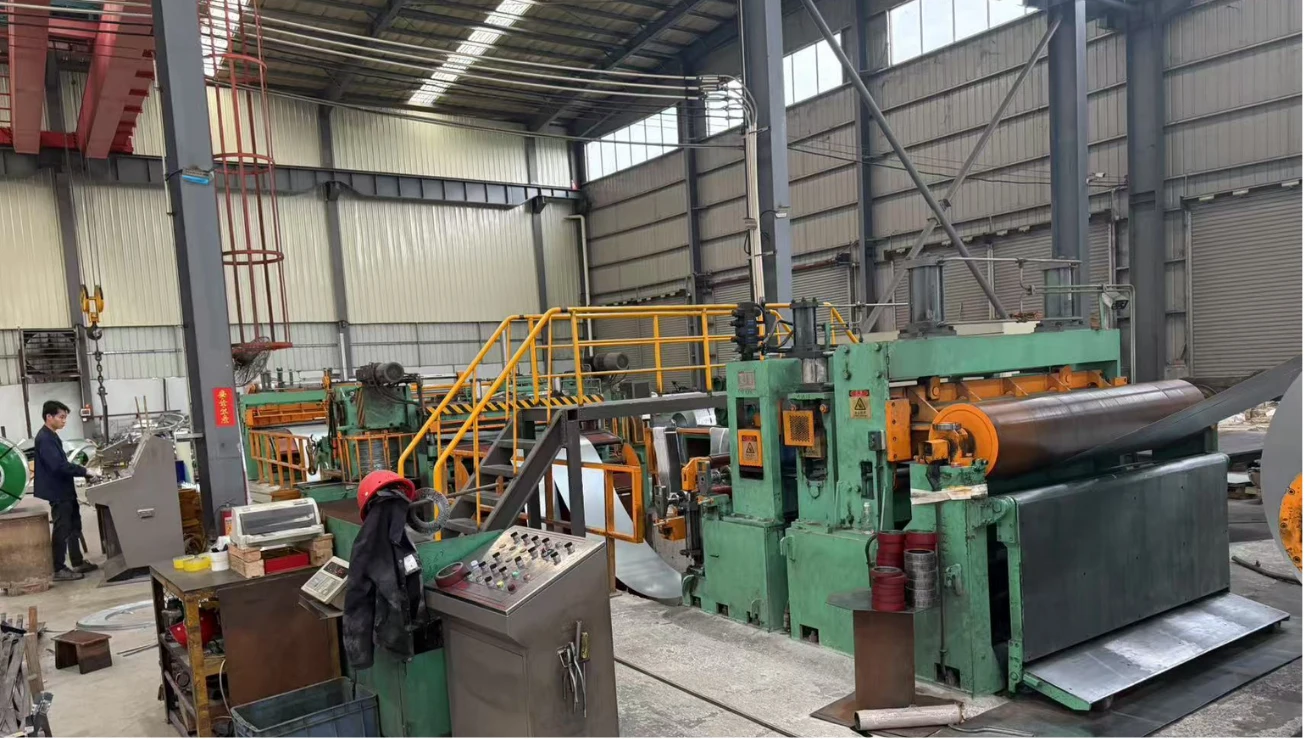
Weijunli Steel is a professional steel manufacturer and supplier serving global contractors, fabricators, distributors, and industrial buyers.
We focus on providing reliable stainless steel and other steel products tailored to specific application requirements. With strict quality control throughout material sourcing, processing, and final inspection, our products meet relevant international standards and certification requirements.
We also provide OEM and customized steel solutions, including material grades, dimensions, thicknesses, surface finishes, and other specifications. With a customer-focused approach and stable production capabilities, Weijunli supports B2B customers with consistent quality and dependable steel supply.