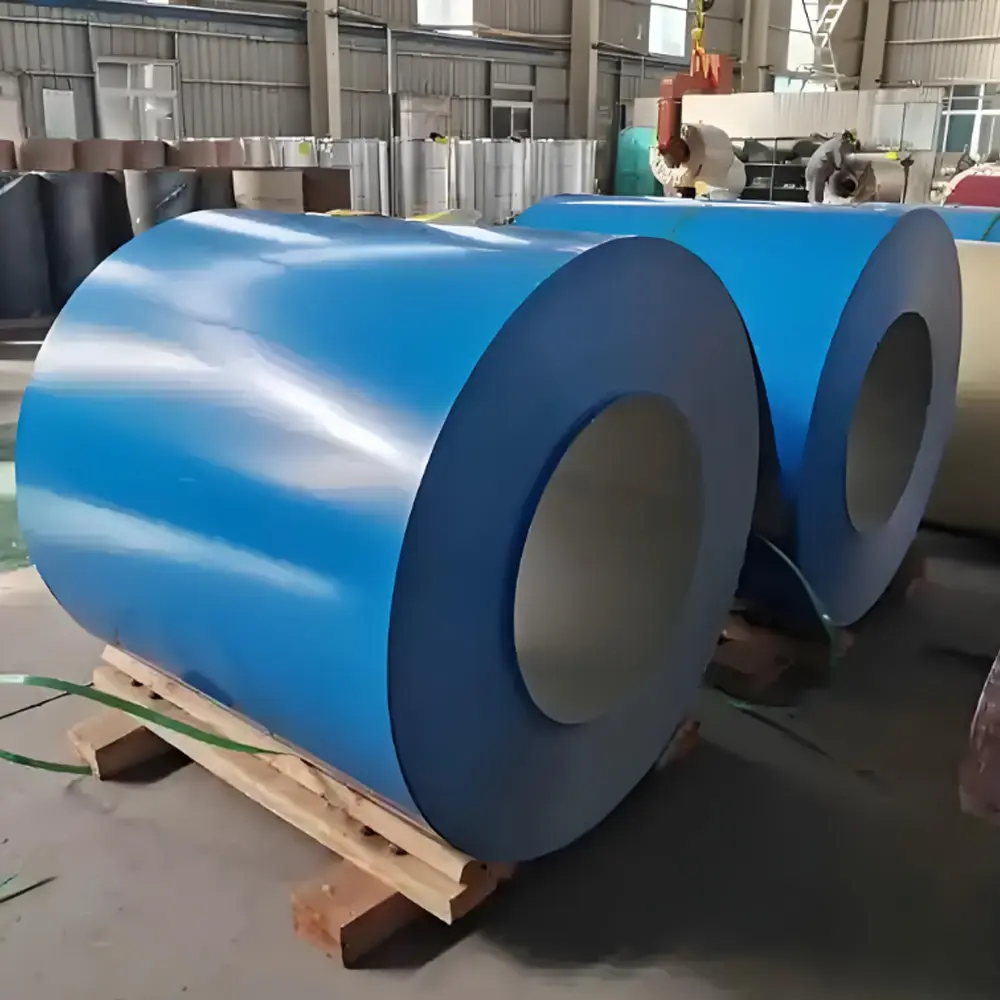
O aço magnético é um material essencial nos núcleos magnéticos de motores e geradores. O seu desempenho magnético, espessura, revestimento isolante e propriedades mecânicas podem influenciar as perdas de energia, a temperatura de funcionamento, a eficiência de fabrico e o desempenho global das máquinas elétricas rotativas.
No entanto, a seleção de aço magnético para um motor ou gerador não se resume simplesmente a escolher uma classe com baixas perdas no núcleo. Os compradores também têm de ter em conta as condições de funcionamento da máquina, o desenho do núcleo, o processo de fabrico das lâminas e as especificações de entrega exigidas.
Por que razão se utiliza aço magnético em motores e geradores?
O aço magnético é concebido para suportar o fluxo magnético em equipamentos elétricos. Em motores e geradores, é habitualmente utilizado no fabrico de núcleos magnéticos laminados, nomeadamente nos conjuntos do estator e do rotor.
O seu principal objetivo é proporcionar um percurso magnético eficaz, limitando simultaneamente as perdas de energia durante a magnetização repetida.
O papel do aço magnético nos núcleos magnéticos
Num motor elétrico, o campo magnético gerado pelo estator interage com o rotor para produzir movimento mecânico. Num gerador, a energia mecânica aciona o rotor, produzindo um campo magnético variável que induz energia elétrica nos enrolamentos do estator.
Ambos os processos dependem de circuitos magnéticos. O aço elétrico fornece o material do núcleo pelo qual passa o fluxo magnético.
Uma característica fundamental do processo de fabrico é o facto de os núcleos serem geralmente construídos a partir de finas lâminas de aço, em vez de um único bloco maciço. As camadas isolantes entre as lâminas ajudam a limitar as correntes parasitas circulantes, reduzindo as perdas de energia e a geração de calor associadas.
Por conseguinte, o material tem de conciliar vários requisitos:
- Baixas perdas magnéticas nas condições de funcionamento previstas.
- Permeabilidade magnética adequada para o circuito magnético da máquina.
- Espessura adequada e consistência dimensional para a produção de laminados.
- Propriedades mecânicas adequadas para perfuração, corte e empilhamento.
- Desempenho de isolamento fiável entre as camadas individuais.
Por que razão o aço elétrico não orientado é frequentemente utilizado
Aço elétrico não orientado (NOES) é amplamente utilizado em máquinas elétricas rotativas, uma vez que as suas propriedades magnéticas foram concebidas para serem relativamente consistentes em diferentes direções no plano.
Esta característica é útil nos núcleos de motores e geradores, onde os percursos do fluxo magnético podem estender-se em várias direções.
Em comparação, o aço elétrico de grão orientado destina-se principalmente a aplicações em que o fluxo magnético segue uma direção preferencial, nomeadamente nos núcleos de transformadores.
Para muitas aplicações em motores e geradores, o NOES é, por isso, uma categoria de materiais importante a avaliar. No entanto, a seleção final deve continuar a depender do projeto da máquina, das condições de funcionamento e do desempenho magnético exigido.
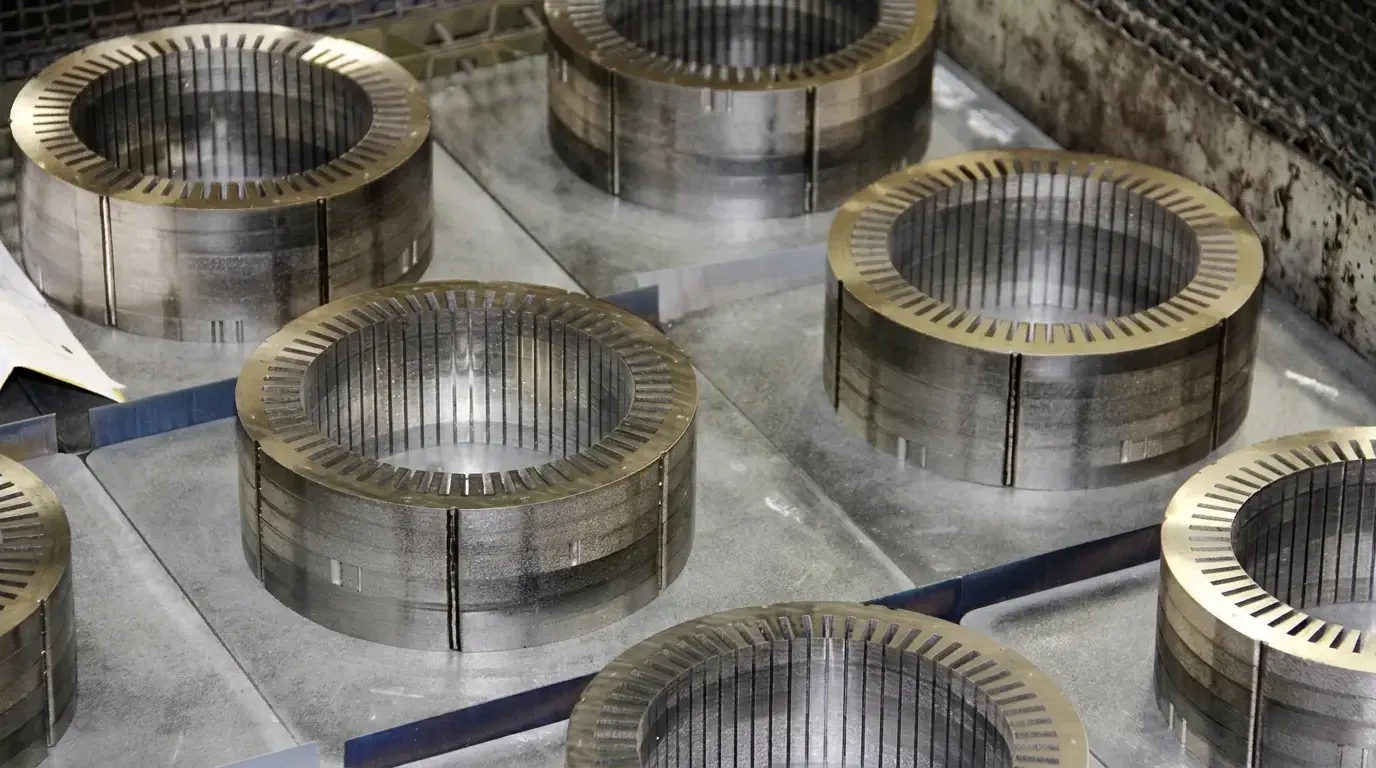
Requisitos relativos ao aço magnético para motores
Os motores elétricos funcionam através da interação dos campos magnéticos no estator e no rotor. O aço magnético utilizado nestes componentes tem de suportar o circuito magnético do motor, cumprindo simultaneamente os requisitos de fabrico e funcionamento do equipamento.
Requisitos relativos aos núcleos do estator e do rotor
O estator é a parte fixa de um motor. O seu núcleo laminado proporciona o caminho magnético e contém ranhuras para os enrolamentos.
O rotor é o componente rotativo. Dependendo do design do motor, o seu núcleo também pode ser constituído por lâminas de aço magnético empilhadas.
Embora ambos os componentes possam utilizar aço magnético, os seus requisitos específicos não são necessariamente idênticos.
| Componente | Função principal | Considerações relativas à aquisição |
|---|---|---|
| Núcleo do estator | Sustenta o campo magnético e aloja os enrolamentos | Perdas no núcleo, permeabilidade, geometria da laminação, qualidade do puncionamento |
| Núcleo do rotor | Suporta o circuito magnético rotativo | Desempenho magnético, requisitos mecânicos, precisão dimensional, processo de fabrico |
As propriedades dos materiais necessárias dependem da arquitetura do motor. Por exemplo, um motor de alta velocidade pode dar maior ênfase aos requisitos mecânicos e estruturais, enquanto um motor orientado para a eficiência pode atribuir especial importância às perdas magnéticas.
Buyers should therefore identify the specific component and motor design before requesting a quotation.
Como o design do motor influencia a escolha dos materiais
Several operating and design factors affect the choice of electrical steel:
- Efficiency targets: Lower core losses can help reduce energy dissipation in the magnetic core.
- Operating frequency: Magnetic losses vary with frequency, so material performance must be evaluated under relevant test conditions.
- Flux density: The operating magnetic flux density influences the required magnetic properties and the risk of approaching saturation.
- Motor size and weight: Core design involves trade-offs between material performance, dimensions, and overall equipment requirements.
- Production volume: High-volume motor manufacturing may place greater emphasis on consistent punching performance, dimensional tolerances, and material availability.
A material that performs well in one motor design is not automatically the best choice for another. Buyers should provide the intended application and relevant technical requirements rather than requesting a generic motor-grade material.
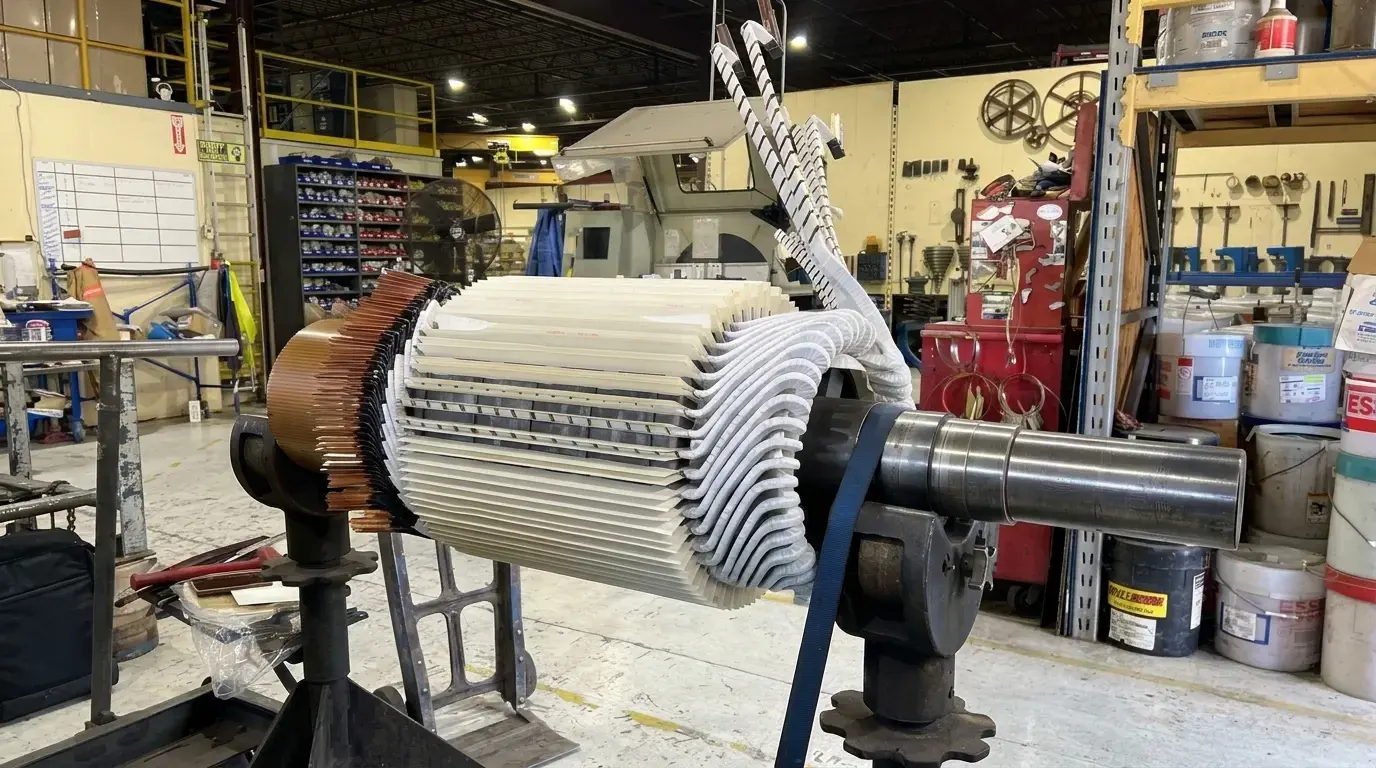
Requisitos relativos ao aço magnético para geradores
Generators also use laminated magnetic cores, but their operating conditions and construction can vary significantly depending on the generator type.
Electrical steel selection should account for the generator’s design, operating speed, frequency, magnetic loading, and efficiency requirements.
Aplicações do estator e do rotor de geradores
In many generator designs, the stator core is assembled from stacked electrical steel laminations. The laminations help provide a magnetic path while limiting eddy-current losses.
The rotor construction varies with the generator’s design. Some generator types use laminated magnetic components, while others have different rotor structures and material requirements.
Consequently, buyers should not assume that every generator uses the same electrical steel configuration.
When sourcing material, clarify:
- Whether the steel is intended for the stator, rotor, or another magnetic component.
- The generator’s operating frequency and speed.
- The required magnetic performance.
- The lamination dimensions and manufacturing process.
- Any mechanical or thermal constraints specified by the equipment designer.
Os diferentes modelos de geradores exigem considerações diferentes
Generator applications are not interchangeable.
| Generator application | Relevant operating considerations | Material selection focus |
|---|---|---|
| Diesel generator | Engine-driven operation and specified output frequency | Magnetic performance under the intended operating conditions |
| Hydroelectric generator | Generator design and operating speed associated with the turbine system | Core design, magnetic loading, and manufacturing requirements |
| Wind turbine generator | Generator architecture, operating range, and power conversion system | Frequency-related performance, magnetic losses, and design-specific requirements |
These are general purchasing considerations, not fixed material prescriptions. The actual requirements must come from the generator design and engineering specifications.
For example, a buyer sourcing steel for a hydroelectric generator should not select material based only on its application category. The generator’s design parameters and core specifications are more useful for determining the appropriate grade and thickness.
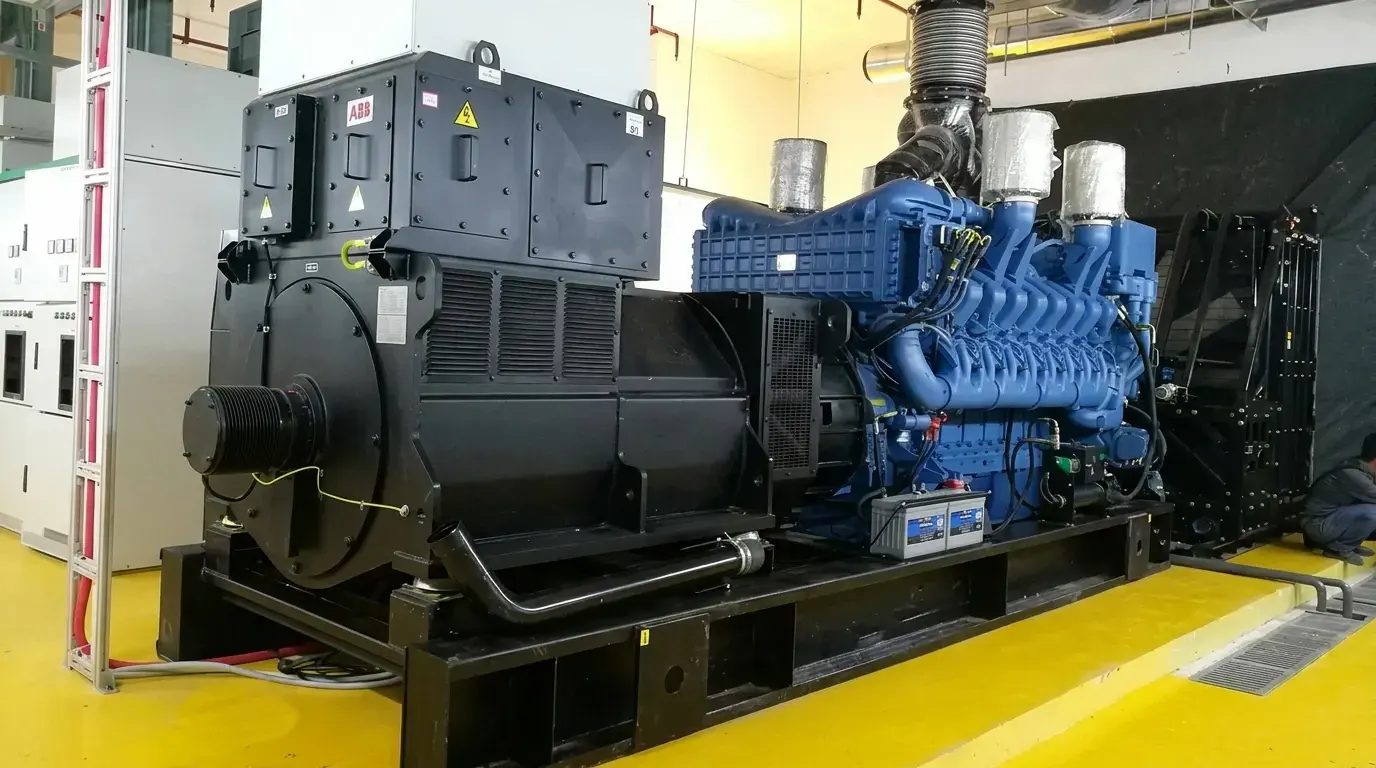
Fatores-chave na seleção de aço magnético para motores e geradores
Once the application and core component are identified, buyers can evaluate the material’s technical characteristics.
Perdas no núcleo e desempenho magnético
Core loss refers to the energy dissipated in a magnetic core as it undergoes repeated magnetization. It generally includes hysteresis loss and eddy-current loss.
For motor and generator applications, core loss is an important consideration because it contributes to energy dissipation and heat generation.
When comparing electrical steel products, buyers should check:
- Specific total core loss at the stated test conditions.
- Magnetic polarization or flux density at the relevant field strength.
- The frequency and test method used for the reported values.
- Whether the values correspond to the required material thickness and grade.
A low core-loss figure is not meaningful without its test conditions. Two products should not be compared directly if their reported values were measured at different frequencies, magnetic polarizations, or testing conditions.
Espessura e fator de empilhamento
Electrical steel is supplied in different thicknesses. Thickness affects magnetic performance, lamination manufacturing, and the design of the assembled core.
Thinner laminations can help reduce eddy-current losses, but they may also affect material handling, punching productivity, and manufacturing costs.
Another important consideration is the stacking factor. This describes the proportion of the laminated core’s total volume occupied by steel rather than insulation layers, coatings, and gaps.
A lower stacking factor means less steel is present within a given core volume. This needs to be considered during magnetic circuit design.
Buyers should specify the required nominal thickness and tolerance rather than selecting a thickness based on a general industry preference.
Revestimento isolante e resistência interlaminar
Electrical steel laminations generally require insulation between adjacent sheets to restrict eddy currents.
The coating influences interlaminar resistance and can also affect processing characteristics, stacking, and the final core’s effective dimensions.
When evaluating coating options, buyers should confirm:
- The required coating type or specification.
- Insulation performance requirements.
- Compatibility with punching, cutting, and subsequent processing.
- Any thermal or assembly requirements.
- Whether the coating is suitable for the intended application.
The coating should be selected as part of the complete core manufacturing specification, not treated as an optional cosmetic feature.
Propriedades mecânicas e capacidade de perfuração
Electrical steel must also be suitable for the manufacturing process used to produce the core.
Laminations are commonly manufactured through punching, stamping, or cutting. The material’s mechanical properties and surface condition can influence dimensional accuracy, burr formation, tool wear, and production consistency.
Punching can also introduce mechanical stress into the material, potentially affecting its magnetic performance.
Buyers should therefore consider:
- Thickness and flatness consistency.
- Tensile and yield properties where specified.
- Hardness requirements, if relevant.
- Punching or cutting method.
- Burr-height requirements.
- Whether additional stress-relief annealing is part of the production process.
The right balance depends on the lamination geometry, production equipment, and required finished-core performance.
O que devem os compradores especificar ao adquirir aço elétrico?
Incomplete technical requirements are a common source of quotation delays and material mismatches. A clear RFQ helps suppliers identify suitable products and reduces the risk of receiving material that does not meet the intended application requirements.
The following checklist can be used when preparing a purchasing inquiry.
| RFQ item | Information to provide | Why it matters |
|---|---|---|
| Candidatura | Motor, generator, or other equipment | Establishes the intended use |
| Core component | Stator, rotor, or other component | Clarifies the material’s role |
| Grade and standard | Required grade, standard, or reference specification | Defines the technical baseline |
| Espessura | Nominal thickness and tolerance | Affects magnetic performance and processing |
| Propriedades magnéticas | Core-loss and magnetic polarization requirements | Enables technical comparison |
| Test conditions | Frequency, magnetic polarization, and test method | Makes performance data comparable |
| Revestimento | Required insulation coating or specification | Defines interlaminar insulation needs |
| Propriedades mecânicas | Relevant strength, hardness, or processing requirements | Supports lamination manufacturing |
| Formulário do produto | Coil, sheet, or other required form | Determines supply and processing arrangements |
| Condições de entrega | Fully processed or semi-processed, where applicable | Clarifies further processing requirements |
| Documentation | Mill test certificate and other required inspection records | Supports material verification |
Not every buyer will have all these details at the beginning of the sourcing process. However, providing the application, component, thickness, grade, and available magnetic requirements gives suppliers a useful starting point.
If the engineering specification is still being developed, share the available drawings, technical documents, or reference material. The supplier can then assess whether its available products and processing capabilities match the stated requirements.
Como avaliar um fornecedor de aço elétrico
Choosing the right material is only part of the sourcing process. Buyers also need to assess whether the supplier can provide consistent products, accurate documentation, and suitable processing support.
Verificar as especificações técnicas e a documentação
Start by checking whether the supplier can provide clear technical information for the proposed material.
Relevant documents may include:
- Product datasheets.
- Mill test certificates.
- Chemical composition records, where required.
- Magnetic property test results.
- Mechanical property data.
- Coating and dimensional specifications.
Check that the information corresponds to the actual grade, thickness, and product batch being quoted.
Do not rely solely on a general product description or an advertised core-loss value. Ask for the applicable test conditions and supporting documentation before placing a bulk order.
Avaliar as capacidades de processamento e abastecimento
Electrical steel may be supplied in coils or sheets, depending on the product and buyer’s manufacturing requirements.
For buyers who need additional processing, supplier capabilities may also matter. Confirm whether the supplier can support the required dimensions, cutting specifications, tolerances, packaging, and delivery arrangements.
For distributors and importers, consistency between repeat orders is particularly important. Material specifications, inspection requirements, and packaging standards should be clearly documented before production or shipment.
When comparing an fornecedor de aço magnético, evaluate more than the quoted price. Technical documentation, dimensional consistency, processing support, and communication during order fulfillment all affect the reliability of the supply relationship.
Conclusão
Selecting electrical steel for motors and generators requires more than comparing grades or choosing the lowest available core-loss value. Buyers need to consider the machine’s operating conditions, magnetic requirements, lamination thickness, insulation coating, mechanical properties, and manufacturing process.
The most effective purchasing approach is to define the application and core component first, establish measurable technical requirements, and then evaluate suppliers against those specifications.
Weijunli Steel supplies non-oriented electrical steel for industrial applications and supports buyers with product selection and custom steel processing solutions. For motor and generator material sourcing, buyers can discuss their required grades, thicknesses, dimensions, and documentation needs with the team to identify suitable supply options.