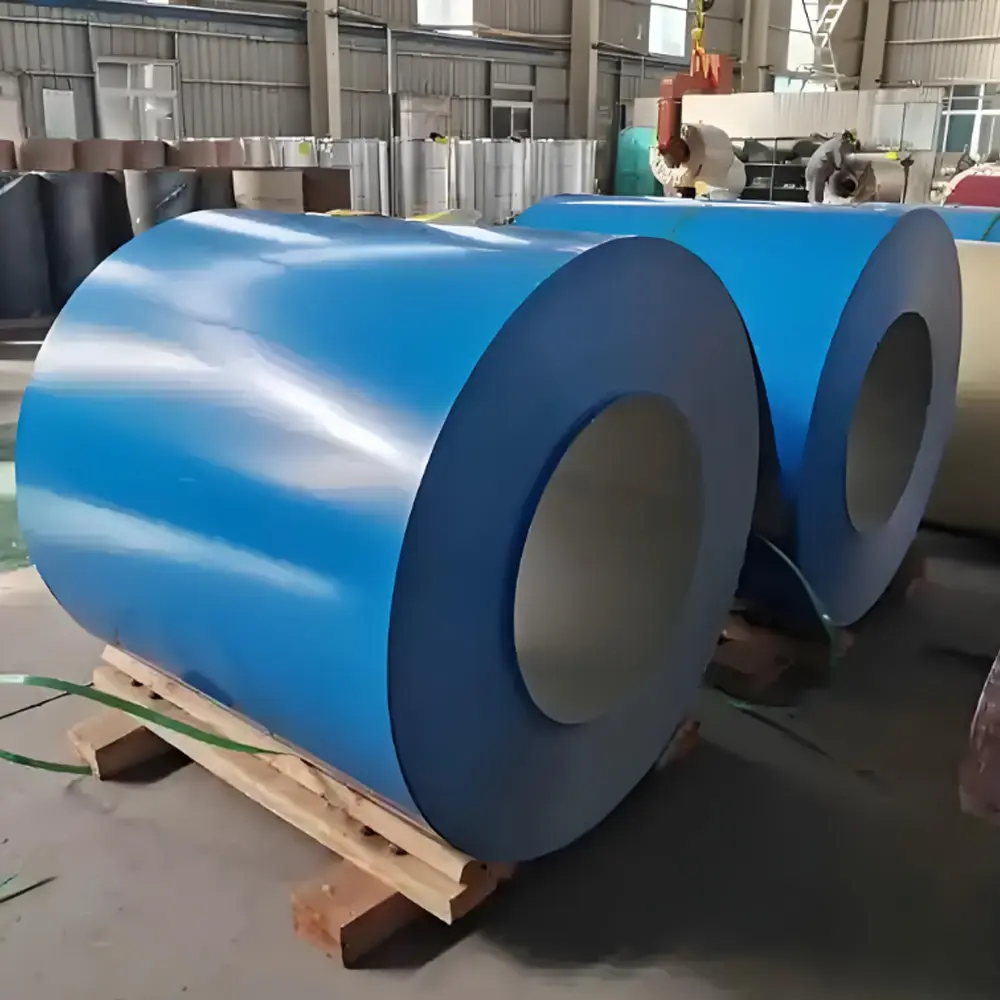
Choosing between fully processed and semi-processed electrical steel affects more than the material’s purchase price. It also determines where final annealing takes place, how much downstream processing your production line must handle, and how the finished laminations achieve their required magnetic properties.
For motor manufacturers, electrical component producers, and industrial buyers, the right choice depends on the required magnetic performance, punching process, production capacity, and total manufacturing cost.
En tant que Fournisseur d'acier en Chine, Weijunli Steel explains the differences between fully processed and semi-processed non-oriented electrical steel (NOES), compares their processing requirements, and outlines the factors buyers should evaluate before placing an order.
Fully Processed vs. Semi-Processed Electrical Steel: Key Differences
The main difference between fully processed and semi-processed electrical steel is when the final annealing process takes place.
Fully processed electrical steel is annealed by the steel mill before delivery. Its magnetic properties have already been developed when the material reaches the customer.
Semi-processed electrical steel is generally supplied in a cold-rolled and skin-passed condition. The customer performs the final annealing process after punching or cutting to develop the required magnetic properties.
| Comparison Factor | Fully Processed Electrical Steel | Semi-Processed Electrical Steel |
|---|---|---|
| Final annealing | Completed by the steel mill | Completed by the customer or downstream processor |
| Delivery condition | Final magnetic properties already developed | Requires further annealing to develop final magnetic properties |
| Customer processing | Generally no final magnetic-property development annealing required | Requires a suitable final annealing process |
| Propriétés magnétiques | Evaluated in the supplied, annealed condition | Commonly evaluated after the specified final annealing |
| Production requirements | Less downstream heat-treatment responsibility | Requires additional processing equipment or an annealing partner |
| Process control | More of the material-property development is handled by the mill | More control over final processing remains with the customer |
| Typical consideration | Simplified production workflow | Greater flexibility in downstream processing |
The distinction is not simply that one type has better magnetic properties than the other. Both can be suitable for different motor and electrical applications when the grade, thickness, processing route, and final performance requirements are properly matched.
Technical descriptions from manufacturers such as ArcelorMittal distinguish the two product conditions by the location of the final annealing process. Similarly, voestalpine’s delivery specifications distinguish fully processed material from semi-processed material that requires customer-side heat treatment.
How Do Processing Requirements Affect Manufacturing Costs?
The choice between fully processed and semi-processed electrical steel should be evaluated against the entire production process, rather than material price alone.
Fully Processed Electrical Steel: Simplifying Production
Fully processed electrical steel arrives with its final magnetic properties already developed through mill annealing.
For manufacturers, this can simplify production planning because the material generally does not require another final annealing operation to develop its magnetic properties. After receiving the material, manufacturers can proceed with processes such as slitting, punching, stamping, stacking, and motor assembly according to their production requirements.
This can be advantageous for manufacturers that:
- Do not have suitable annealing equipment.
- Want to reduce the number of production stages.
- Need a more straightforward material-handling process.
- Prefer to receive material with established magnetic properties.
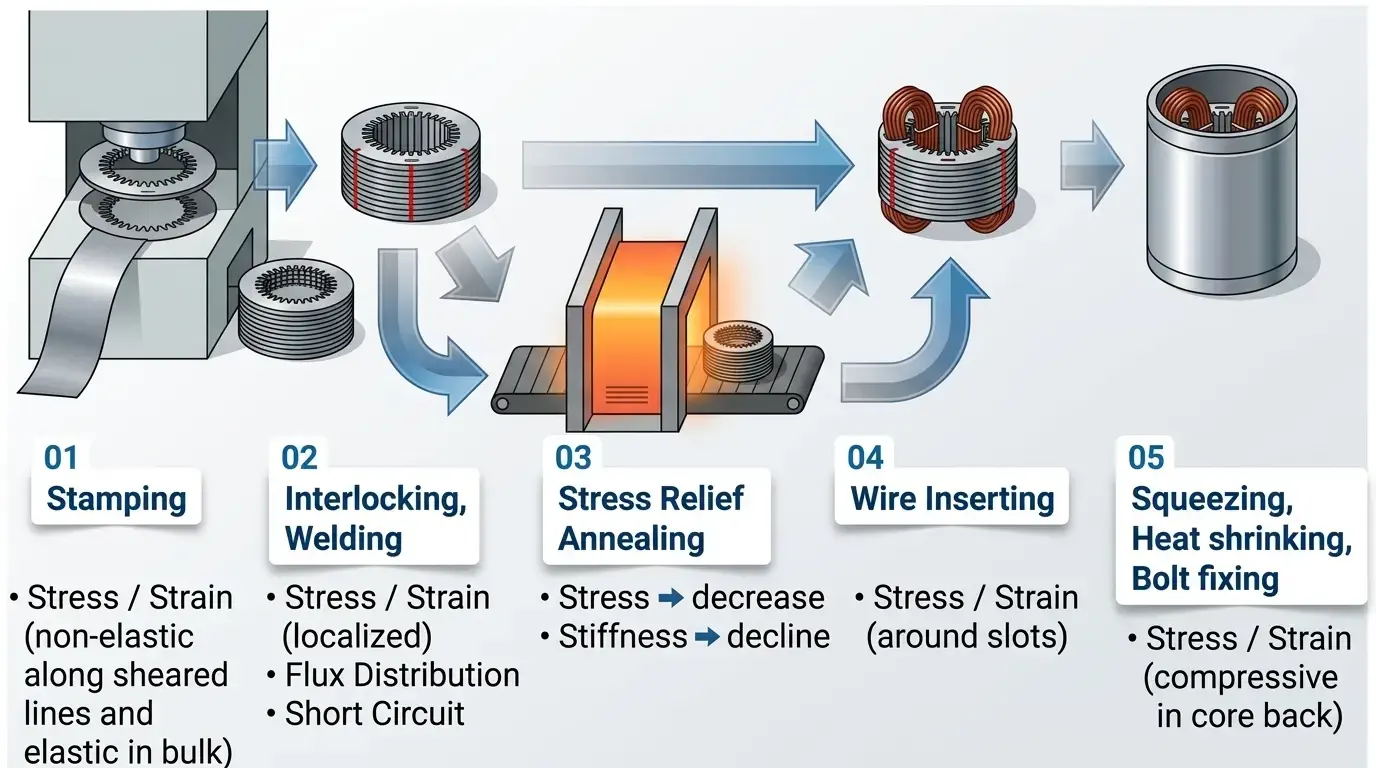
However, fully processed material is not necessarily free from all downstream heat-treatment requirements. Punching and shearing can introduce mechanical stress into electrical steel, potentially affecting its magnetic performance.
In certain applications, manufacturers may still consider stress-relief annealing after fabrication. This is different from the final magnetic-property development annealing required for semi-processed electrical steel.
Semi-Processed Electrical Steel: More Control Over Final Processing
Semi-processed electrical steel transfers part of the material-property development process to the downstream manufacturer.
After punching or cutting, the laminations undergo final annealing to improve their magnetic properties and reduce the effects of processing-induced stress.
This approach gives manufacturers more control over the final processing stage. It may also allow them to coordinate annealing with their existing production workflow.
However, the additional process introduces costs and operational requirements, including:
- Annealing equipment investment or outsourcing fees.
- Energy consumption and production labor.
- Additional handling and transportation.
- Process monitoring and quality control.
- Production time associated with heat treatment.
- Potential losses caused by deformation, oxidation, or inconsistent processing.
The actual cost advantage depends on the manufacturer’s production scale, available equipment, process efficiency, and material requirements.
A lower purchase price does not automatically make semi-processed electrical steel the more economical option. Buyers should compare the total cost per finished lamination or motor core.
How Do Magnetic Properties and Punchability Affect Different Applications?
Magnetic performance and manufacturing characteristics are closely connected in electrical steel selection. Buyers should consider how the material behaves both before and after downstream processing.
Core Loss and Magnetic Permeability in Motor Applications
Core loss and magnetic permeability are two important indicators of electrical steel performance.
Core loss represents the energy dissipated in the steel core during alternating magnetization. Lower core loss can help reduce energy losses in motors and other electrical equipment.
Magnetic permeability describes how easily the material can be magnetized under an applied magnetic field. Its importance depends on the motor’s design, operating conditions, and required magnetic flux density.
Fully processed electrical steel is supplied after the mill has completed final annealing. Its magnetic properties are therefore established before the customer begins punching and fabrication.
Semi-processed electrical steel requires final annealing after downstream processing. This treatment can improve magnetic properties affected by mechanical processing and help the finished laminations meet the intended performance requirements.
However, buyers should not assume that fully processed material always has lower core loss or higher permeability than semi-processed material. Performance depends on the specific grade, thickness, processing conditions, and measurement requirements.
When comparing quotations, confirm whether the magnetic-property values refer to the supplied condition or the condition after the specified final annealing process.
Punchability and Lamination Quality in Small Motor Production
Punchability affects how efficiently electrical steel can be converted into motor laminations.
During punching and shearing, mechanical deformation can introduce residual stress around the cut edges. This may affect magnetic properties and increase core loss.
For manufacturers producing large quantities of small motor laminations, punching performance also influences:
- Tool wear and maintenance frequency.
- Dimensional consistency.
- Burr formation.
- Edge quality.
- Production efficiency.
- The consistency of stacked laminations.
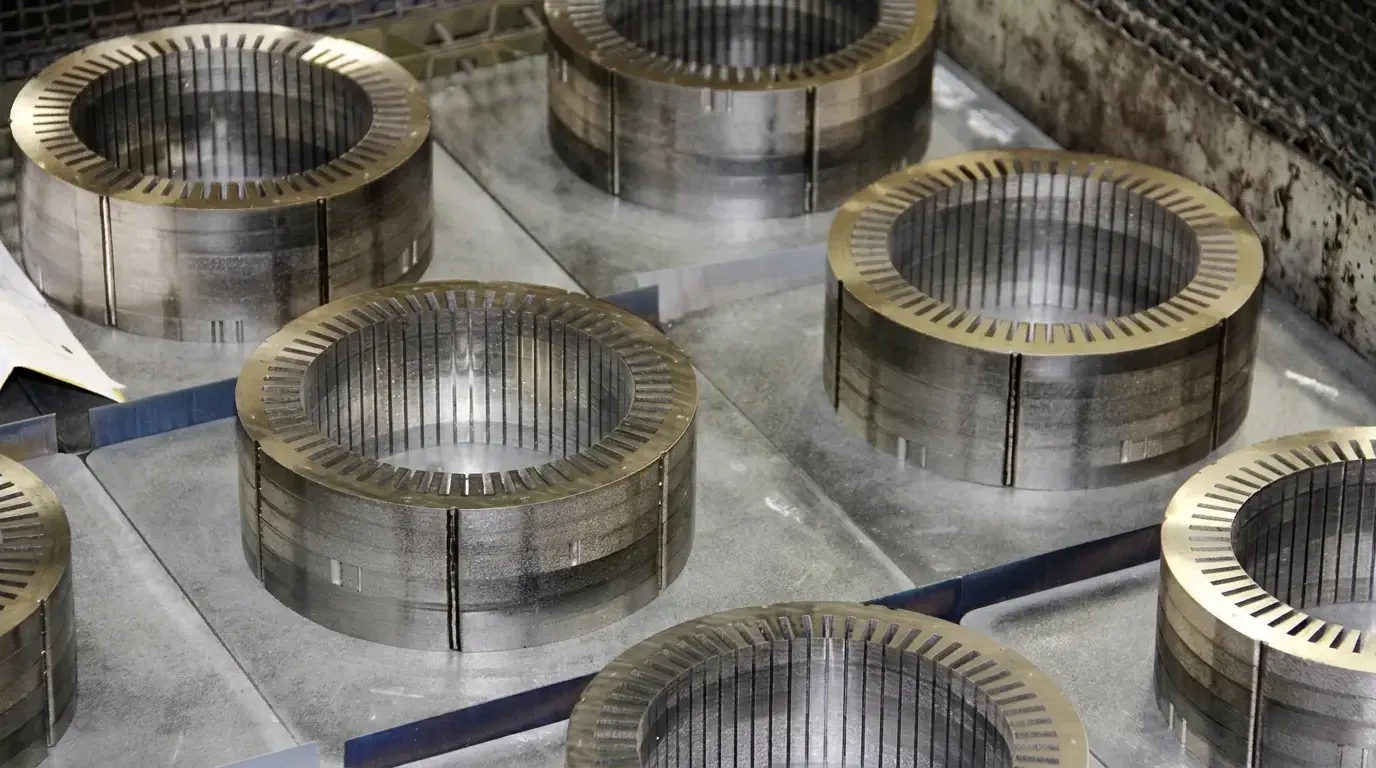
Semi-processed electrical steel is often considered when manufacturers plan to perform final annealing after punching. The heat-treatment process can reduce the effects of processing-induced stress and improve the magnetic performance of the finished laminations.
ArcelorMittal’s product information also identifies improved magnetic properties after customer-side annealing as a key consideration for semi-processed electrical steel.
Nevertheless, annealing does not eliminate the need for proper punching control. Die clearance, tool condition, material thickness, and production parameters remain important factors in lamination quality.
Why Annealing Requirements Matter for Different Manufacturing Setups
The annealing requirement should match the manufacturer’s actual production capabilities.
A manufacturer with an established annealing process may find semi-processed electrical steel easier to integrate into its production workflow. It can coordinate punching, stacking, and heat treatment according to its own manufacturing requirements.
By contrast, a manufacturer without suitable annealing equipment may prefer fully processed material to avoid introducing another production stage.
It is also important to distinguish between two types of heat treatment:
- Final annealing: Used with semi-processed electrical steel to develop its intended magnetic properties after fabrication.
- Stress-relief annealing: May be used with fully processed electrical steel when downstream fabrication introduces stress that needs to be reduced.
These processes serve different purposes and should not be treated as interchangeable.
The appropriate annealing route depends on the electrical steel grade, component design, fabrication process, and required magnetic performance. Buyers should confirm the recommended process with the material supplier and their production or heat-treatment specialists.
Which Type of Electrical Steel Is Suitable for Your Application?
Neither fully processed nor semi-processed electrical steel is universally better. The appropriate choice depends on the application and manufacturing setup.
| Application or Manufacturing Situation | Potentially Suitable Option | Key Considerations |
|---|---|---|
| Moteurs industriels | Fully processed or semi-processed | Evaluate core loss, efficiency requirements, production volume, and annealing capacity |
| Générateurs | Fully processed or semi-processed | Confirm magnetic performance under the intended operating conditions |
| Traction motors | Fully processed or semi-processed | Pay close attention to magnetic performance, lamination design, and production consistency |
| Small industrial motors | Often semi-processed is considered | Assess punching volume and the feasibility of customer-side annealing |
| Fans and household appliances | Fully processed or semi-processed | Balance material performance, production cost, and manufacturing process |
| Compressor motors | Fully processed or semi-processed | Evaluate core loss, lamination quality, and the required production route |
These are general application considerations, not fixed material-selection rules. Manufacturers may use either product condition depending on their motor design, performance targets, and production capabilities.
For buyers comparing available material options, Weijunli’s non-oriented electrical steel products provide a starting point for reviewing the relevant product category. The exact product condition, grade, and magnetic specifications should be confirmed before ordering.
Conclusion
The choice between fully processed and semi-processed electrical steel comes down to where final annealing takes place and how that decision affects the entire manufacturing process.
Fully processed material can simplify production by arriving with its magnetic properties already developed. Semi-processed material gives manufacturers greater control over final annealing but requires additional processing capability and quality control.
Before selecting either option, evaluate the required magnetic properties, material grade, thickness, punching conditions, annealing capacity, and total production cost. Confirming these factors with the supplier helps reduce specification mismatches and supports more consistent motor-core production.
About Weijunli
Weijunli is a China-based electrical steel supplier providing non-oriented and grain-oriented electrical steel for industrial and manufacturing applications. With over 20 years of industry experience, we combine material sourcing with downstream steel processing and customization services to support buyers with different project requirements.
Our electrical steel product range includes:
- ⚙️ Non-Oriented Electrical Steel: Suitable for applications involving rotating magnetic fields, including motors and generators. Explore our acier électrique non orienté.
- ⚡ Grain-Oriented Electrical Steel: Designed for applications requiring directional magnetic properties, particularly transformer cores. Explore our grain-oriented electrical steel.
- 🏭 Steel Processing Capabilities: Our own processing facility supports various downstream operations, including cutting, slitting, punching, and other customized processing options, subject to material compatibility and project requirements.
- 📦 Flexible Sourcing and Customization: We work with multiple steel suppliers to source materials and coordinate specifications, dimensions, processing, and packaging according to customer needs.
- 🌍 B2B Project Experience: Our website reports experience supporting more than 600 global projects, serving buyers with different steel sourcing and processing requirements.
Whether you are sourcing electrical steel for motor manufacturing, transformer production, or other industrial applications, Weijunli can help evaluate material specifications and coordinate suitable supply and processing solutions.
Frequently Asked Questions
Is fully processed electrical steel better than semi-processed electrical steel?
Not necessarily. Fully processed electrical steel arrives with its final magnetic properties developed, while semi-processed material requires customer-side final annealing. The better option depends on the required magnetic performance, production setup, and total manufacturing cost.
Does semi-processed electrical steel always have lower magnetic performance?
No. Semi-processed electrical steel is supplied before final magnetic-property development. After the specified annealing process, it can achieve the intended magnetic properties. Comparisons should use consistent grades, thicknesses, and testing conditions.
Does fully processed electrical steel require annealing after punching?
Not necessarily. It generally does not require final magnetic-property development annealing. However, punching and shearing can introduce stress, so stress-relief annealing may still be considered for certain applications.
Why is semi-processed electrical steel annealed after punching?
Punching and shearing can introduce residual stress and affect magnetic performance. Final annealing helps reduce the effects of this processing stress and develop the material’s intended magnetic properties.
Can semi-processed electrical steel be annealed after stacking?
Yes. Depending on the material grade and manufacturing process, semi-processed electrical steel may be annealed as individual laminations or in a stacked-core condition. The appropriate method must be confirmed with the material and process specifications.
Which type is more economical for motor manufacturers?
There is no universal answer. Semi-processed material may offer a purchase-price advantage in some sourcing situations, but final annealing adds equipment, energy, labor, and production costs. Fully processed material may simplify manufacturing but can have a different material price. Compare the total cost per finished core rather than the price per ton alone.