If you buy cold rolled steel for stamped parts, enclosures, or appliance panels, the single most important specification isn’t the trade name — it’s the cold rolled steel standard you require.
Different standards define chemistry, mechanical windows, surface classes, and tolerances. Saying only “SPCC 1.0 mm” or “cold rolled” hands the supplier too much freedom and guarantees surprises on the production floor.
In this guide, Weijunli Steel, a leading cold rolled steel supplier, explains the major standards, how they map to each other, and exactly what buyers must specify to avoid scrap, rework, and tooling headaches.
What a Cold Rolled Steel Standard Actually Specifies
A standard is not marketing. It defines measurable attributes that matter in production:
- Chemical composition limits (carbon, manganese, etc.)
- Mechanical properties range (yield strength, tensile strength, elongation)
- Thickness and dimensional tolerances across the coil or sheet
- Surface quality classes and permitted defects
- Testing methods and certification requirements (MTC)
When you lock a standard and then add application-level limits (e.g., elongation band, Ra), you convert vague expectations into enforceable acceptance criteria.
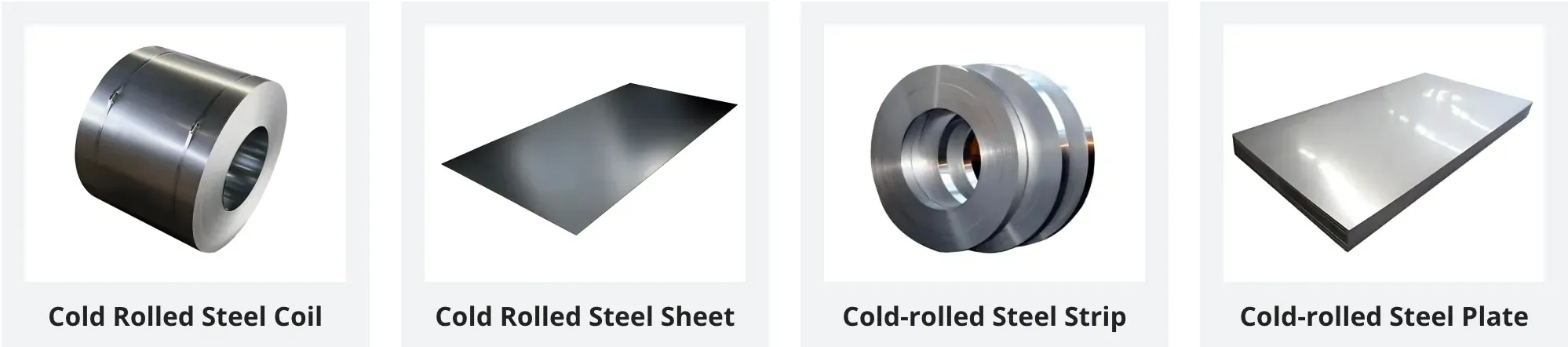
Major Standards in Cold Rolled Steel Wholesale
Below are the global standards that dominate procurement. Learn them and require the right one in your RFQ.
China — GB (GB/T series)
- Common references: GB/T 5213 and related specs for cold-rolled sheets and strips.
- Typical grades seen in procurement: DC01, DC03, DC04 (nomenclature aligns with EN in many cases).
- Why it matters: widely used for domestic supply chains and many Asian steel OEMs.
Japan — JIS (JIS G 3141)
- Common grades: SPCC (commercial cold rolled), SPCD/SPCE (drawing grades).
- Why it matters: JIS grades are often supplied to high-consistency OEMs in Asia and are recognized by many mills across the region.
Europe — EN (EN 10130)
- Typical grades: DC01 / DC03 / DC04 / DC05 / DC06 with clear deep-draw levels.
- Why it matters: EN provides more granular deep-draw categories and is the primary reference for European buyers.
United States — ASTM (A1008 / A1008M)
- Common classifications: Commercial Steel (CS), Drawing Steel (DS), Deep Drawing Steel (DDS), Extra Deep Drawing Steel (EDDS).
- Why it matters: ASTM is prevalent for North American procurement and for steel suppliers serving US OEMs.
Practical note
Terms like “SPCC ≈ DC01” or “DC03 ≈ SPCD” are useful shorthand, but equivalence is approximate — always verify the mechanical bands and surface class, not just the name.
Standard summary table
| Formability / Application | JIS G3141 (Japan) | EN 10130 (Europe) | ASTM A1008 (USA) | GB/T 5213 (China) | Key Characteristics & Procurement Strategy |
| Commercial Quality | SPCC | DC01 | CS Type B | DC01 | Base grade. For bending and flat parts only. No guaranteed elongation. |
| Drawing Quality | SPCD | DC03 | DS Type B | DC03 | Moderate ductility. Suitable for shallow draws and structural reinforcements. |
| Deep Drawing Quality | SPCE | DC04 | DDS | DC04 | The Industry Standard. High ductility for automotive and appliance shells. |
| Extra Deep Drawing | SPCF | DC05 | EDDS | DC05 | Non-aging. Used for complex, high-strain curved surfaces. |
| Super Deep Drawing | SPCG | DC06 | EDDS (IF) | DC06 | Interstitial-Free (IF) steel. Maximum stretchability for precision engineering. |
How Standards Differ in Ways That Break Production
Understanding the technical differences helps you specify what prevents failures:
- Yield and elongation bands — small differences change whether a part cracks at a bend or survives a single-hit draw.
- Thickness tolerance — looser control yields springback variance and misaligned hole patterns.
- Surface class / Ra — plating and cosmetic finishes fail when Ra or permitted defects are wrong.
- Testing & certification — absence of clear MTC and heat traceability makes root cause analysis impossible when problems occur.
You want a standard + application constraints: e.g., “EN 10130 DC04; YS 140–180 MPa; Elongation ≥ 28%; Ra ≤ 0.6 µm; no roll marks; MTC per EN 10204 3.1.”
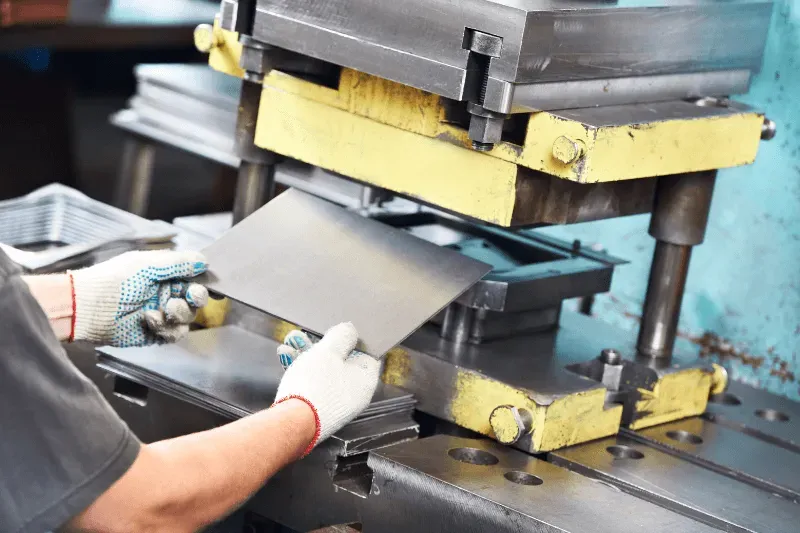
Quick Equivalence Table (Practical, Not Perfect)
| Application level | China (GB) | Japan (JIS) | Europe (EN) | USA (ASTM) |
|---|---|---|---|---|
| Commercial | — | SPCC | DC01 | CS |
| Drawing | DC03 | SPCD | DC03 | DS |
| Deep drawing | DC04 | SPCE | DC04 | DDS / EDDS |
Use this table as a starting point — always verify the mechanical ranges.
How to Choose the Right Standard for Your Application
Match the standard to the function of the part, not to a brand name.
- Precision stamped or plated visible parts → choose deep-draw classes (EN DC04 / JIS SPCE / ASTM DDS) and specify Ra and flatness.
- High-speed progressive dies → require tight thickness tolerances and small burr acceptance; prefer cold rolled grades with documented SPC.
- Thick structural brackets, welded assemblies → HR or thicker cold rolled equivalents are acceptable; focus on YS/TS bands and weldability.
- Deep drawing / single-hit draws → choose a deep-draw grade and require sample validation.

What to Put in the Bulk Buy Cold Rolled Steel RFQ
Do not issue a purchase order with only a grade name. Use this minimal RFQ block — copy/paste into your supplier requests:
- Standard & grade: e.g., EN 10130 DC04 (or JIS SPCE, or ASTM DDS)
- Thickness & tolerance: e.g., 0.8 mm ±0.02 mm; max across-coil variation 0.01 mm
- Mechanical window: specify acceptable ranges for YS / TS / El (not single nominal values)
- Surface finish: bright finish / skin-pass / Ra ≤ X µm; acceptable defect classes
- Edge condition: slitted or sheared; burr ≤ X mm after slitting
- Coil handling: film, interleave, desiccant for export shipments
- Traceability: MTC per EN 10204 3.1 (or equivalent), heat/coil ID on each coil
- Validation: first-coil trial; signed first-article inspection report before full shipment
Common Procurement Mistakes
- Mistake: Specifying only a grade name (e.g., “SPCC 1.0 mm”).
Consequence: Supplier ships a technically compliant coil that fails your forming operation. - Mistake: Assuming “equivalent” grades interchange without checking YS/El.
Consequence: Cracks, springback, and dimensional drift. - Mistake: Not requiring MTC or batch traceability.
Consequence: No defensible supplier claim path when a batch fails.
Conclusion
Standards are not paperwork — they are the operational contract that determines whether your cold rolled steel behaves predictably in stamping, drawing, and finishing. Use a cold rolled steel standard as the backbone of your RFQ, then layer on application constraints (mechanical bands, Ra, burr limits, traceability). That approach converts a vague commodity purchase into an engineering-controlled supply.
About Weijunli Steel – A Reliable Cold Rolled Steel Supplier
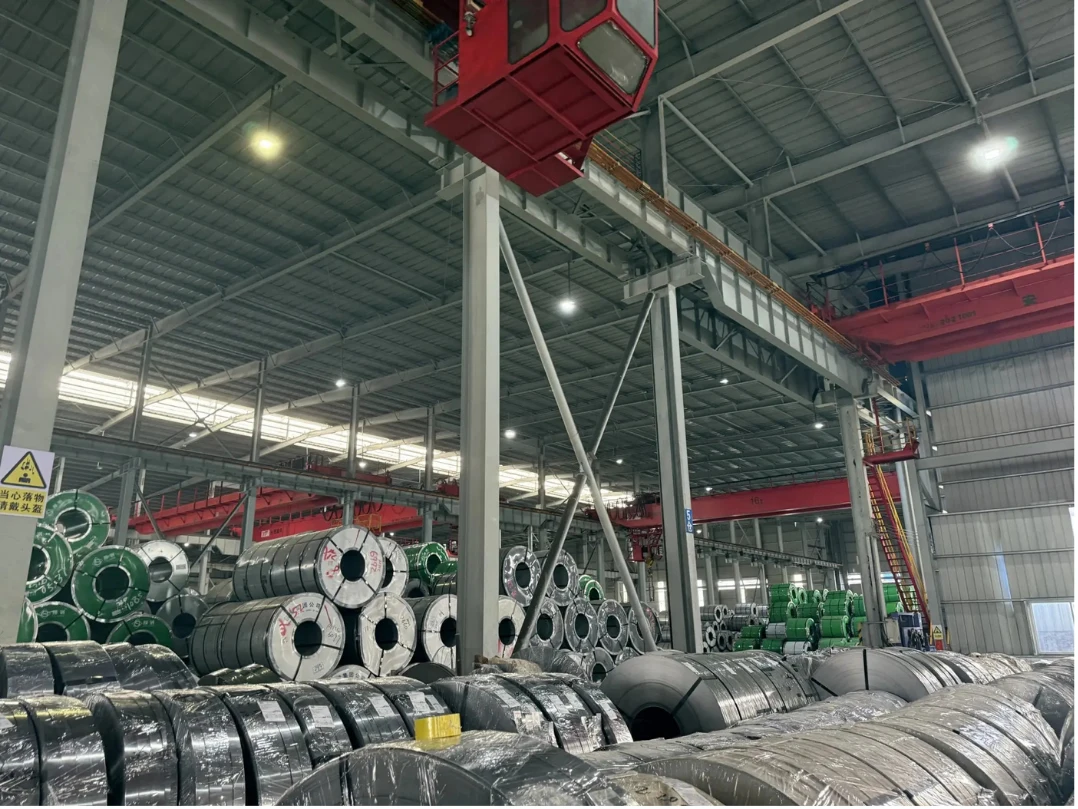
Weijunli Steel operates as a professional cold rolled steel supplier serving OEMs, fabricators, and industrial distributors. Each coil is produced and delivered under controlled grade standards, with stable mechanical properties, consistent thickness tolerance, and documented MTC traceability to ensure batch-to-batch reliability.
Beyond standard GB, JIS, EN, and ASTM grades, Weijunli Steel supports application-driven custom steel solutions—tightened mechanical windows, surface finish control, slit width, edge condition, and export packaging. With structured quality inspection and scalable supply capacity, the company provides B2B buyers with predictable performance rather than commodity-risk sourcing.